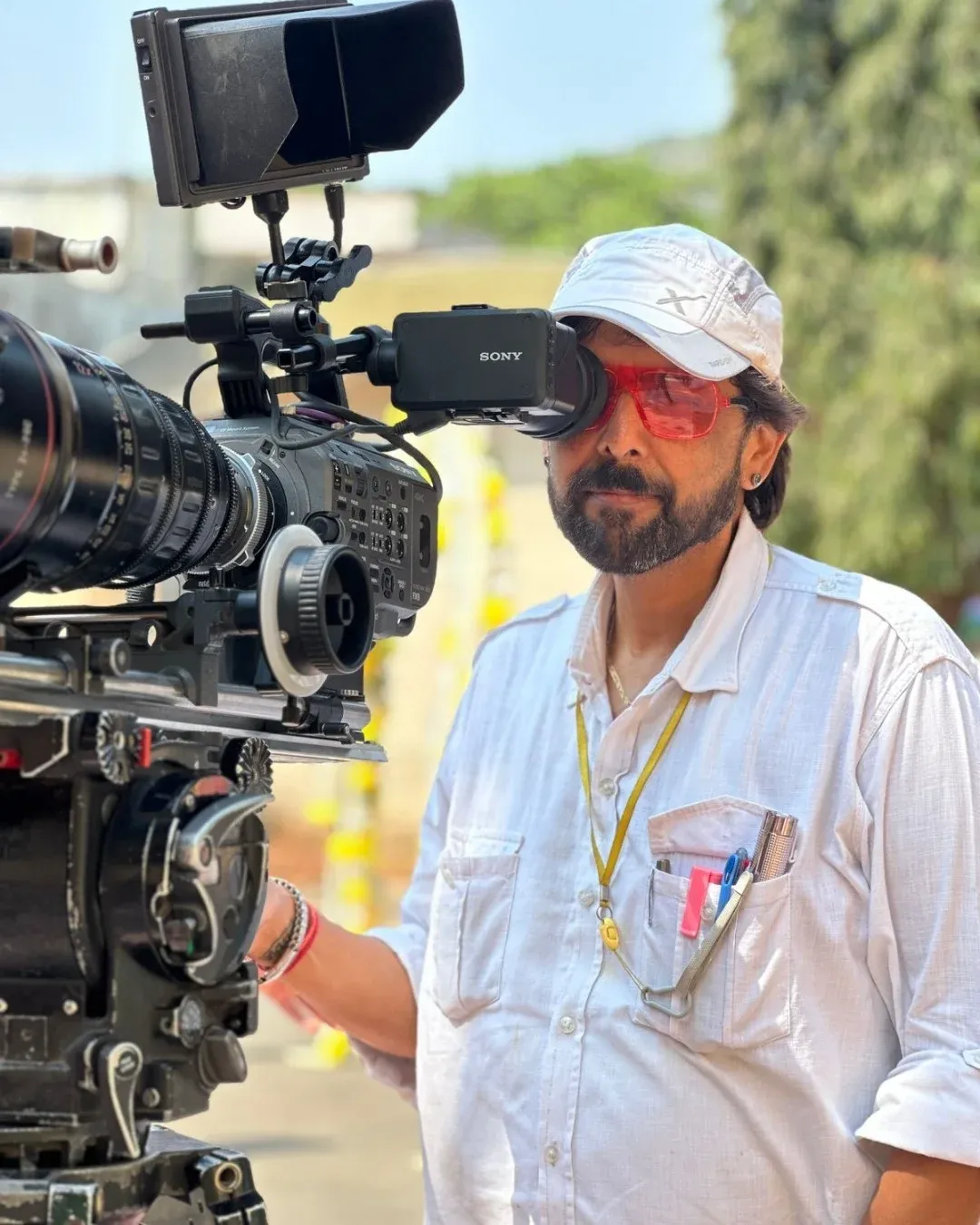
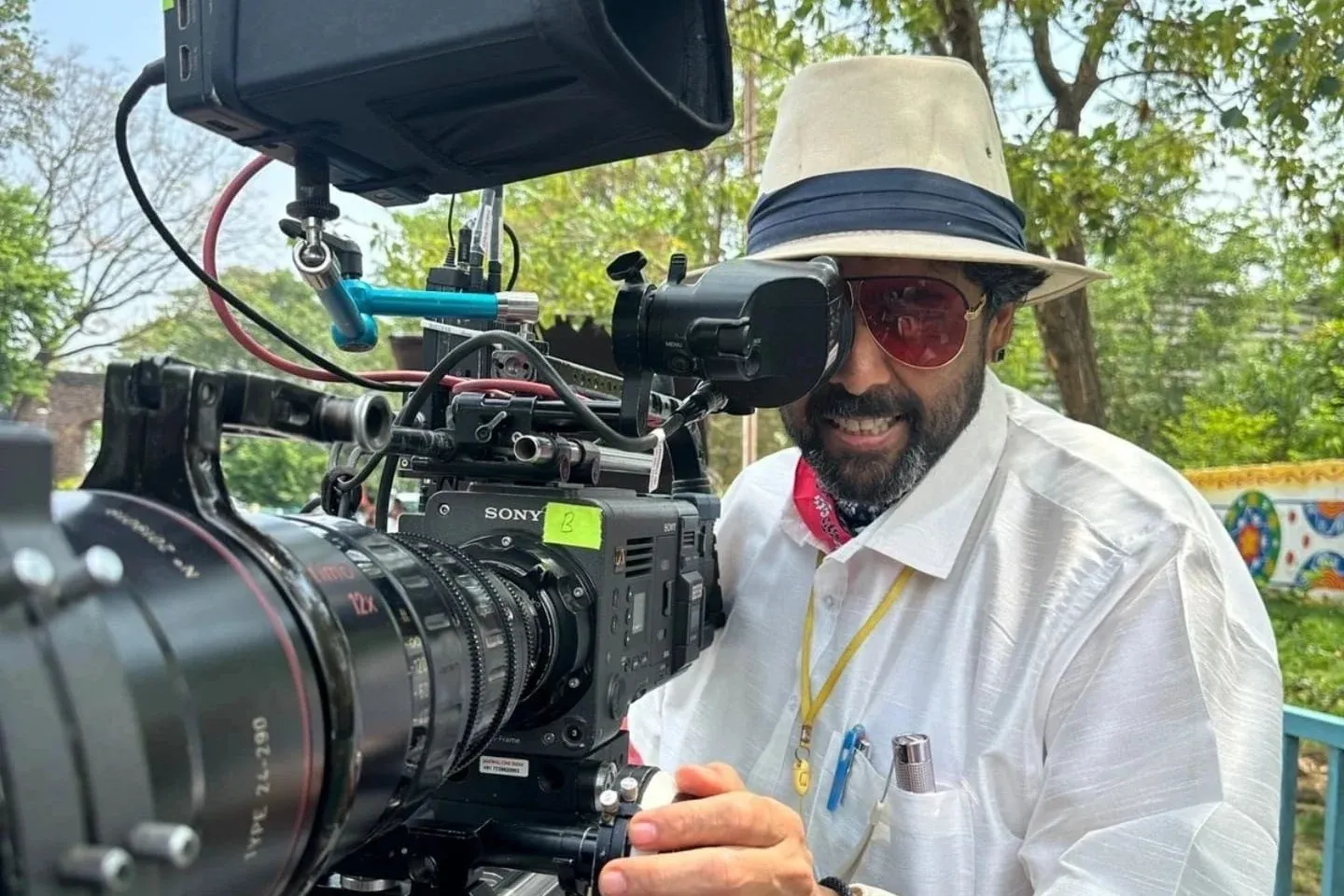
Jaideep Sen on Hard Work, Humility and the Hit Film
He started as a clapper boy in 1990 and has stayed in cinema for more than three decades. Director Jaideep Sen on what the set taught him, and why he never hopes, only believes.
A film buff first
Jaideep Sen did not set out to be an actor, and he is clear about that. "Normally at that age a lot of boys want to be actors, but I had no such confusion. If I loved seeing cinema, someday I'd like to make cinema."
The love came from home. Every Saturday, he, his mother and his elder sister watched the 12 o'clock show. The family lived in Bandra, and Gaiety Galaxy was a permanent fixture in their lives. At around 20, a friend working in the accounts team of a well-known production house asked why he didn't join the industry he was so fascinated by. He dived straight in.
An outsider with a foot in the door
Asked whether the industry is a closed lobby, Jaideep says it was far more welcoming in his time. "All these camps have started very recently, when people became unnecessarily close-knit."
He began as a production intern. His first break came through his mother. She had become friends with the wife of Harry Baweja, who lived in the building next door, and Baweja was then planning his directorial debut. Jaideep joined as the clapper boy, the fourth assistant, on a film with Mithun Chakraborty and a guest appearance by Dharmendra.
His first night shoot was at Kamalistan Studios in Andheri East. "It was my dream coming true. I was enjoying every fraction of a second."
He also remembers the clapper boy's rite of passage. "They say you're on the right track if the cinematographer fires you. It's the first step to becoming a director. There were no monitors then, and you didn't know what the frame was."
Three teachers
Harry Baweja taught him the value of hard work, dedication and focus.
Raj Kanwar, who had just arrived with the hit Deewana, taught him the ropes of filmmaking. Jaideep assisted him on six films over five years and rose to chief assistant director.
Mukul S. Anand was the filmmaker he worshipped. "When I first saw Mukul Anand in person, I was frozen. I couldn't believe I was seeing him."
The loss that shaped him
In 1997 Jaideep was chief assistant director on Mukul Anand's Dus. He landed in the United States on 1 August to begin the shoot, and within three hours had to fly back to Mumbai because his mother had passed away. He returned to the schedule, and 37 days later, on 7 September, Mukul Anand died of a heart attack at 46.
"I thought there was a conspiracy against me. Mukul's loss is bigger to me than the loss of both my parents." He lost his father at 16. Today he is co-authoring Mukul Anand's biography with a National Award-winning writer. "Each breath I take is to carry his legacy forward."
Television and the economics of speed
Jaideep has worked in both film and television. In his view the main difference is time. A film once had a year or two between shoot and release, while a television episode may get a month, sometimes ten days. "That has sharpened my skills. I learned to deliver in very little time, and it made me a better director in the economics of creating content."
Make a hit, not just a good film
Asked about a director's biggest challenge, he gave a candid answer first. "I'm not yet a successful director, so getting a saleable actor on board is a massive challenge for anyone without a hit under his belt. Nothing succeeds like success."
His wider view is that a director must be "a jack of all trades, a master of none," and must aim at a hit. "Don't try to make a good film. Someone else's money is at stake. A niche film recovering its cost is almost a big no."
His models are Manmohan Desai, who "came down to the level of the common man and respected his taste", and two people he has worked with closely, Rakesh Roshan and Sajid Nadiadwala. "Always follow Manmohan Desai as the guru of mainstream cinema."
The day he remembers best
His best day in his career came on the set of Kick, when the other male colleagues were shooting a second-unit sequence and Sajid Nadiadwala asked Jaideep to stay with him. That day his team on the floor was three women: Shivalika Oberoi, Zara Bhiwandiwala and costume head Binalini Jain. "The dedication, the focus and the professionalism that girls bring to a film set is incomprehensibly good. The day went with clockwork precision." His one regret is that he lost the photograph of the three of them on set.
What Rakesh Roshan taught him
During a shoot at Film City, Jaideep felt a dialogue should be shot differently and said so. Rakesh Roshan listened patiently and said no. The next day Jaideep raised it again, and again was heard and refused. About ten days later, at lunch, Roshan asked the cinematographer to shoot a close-up of that very dialogue and told the room, "What Jaideep had said was right."
"He needn't have given me the credit, but he did. That is why he is such a great filmmaker and a great human being. Today, when something similar happens to me, I make sure I publicly credit the person who gave the idea."
Casting and nepotism
"All components come into play. Some people are cast purely on talent, some through relationships." He thinks the word needs care. "Nepotism means an undeserving person gets an opportunity over a deserving one. You can't hold a relationship against someone so talented." On Hrithik Roshan, who started as an assistant director: "He went through the whole grind. If you're untalented, it will show in the final product."
How Krazzy 4 happened
On the outdoor shoot of Krrish in Singapore, Jaideep decided to quit drinking for the schedule. Over drinks in his hotel suite, Rakesh Roshan told him that if he stayed off alcohol for all 55 days, he would give him a film to direct. Jaideep kept his side. "Most people in this world specialize in false promises. Roshan stuck to his word." That became his directorial debut, Krazzy 4.
Actors versus stars
"A star is a ticket seller. A head of a reputed studio once told me: just because the lift man in your building thinks you're a star, you're not a star." The difference is that the audience decides it. He also remembers meeting Dharmendra after a dubbing session, when the star held out his hand to a 20-year-old clapper boy to shake. "Time froze. To be a Dharmendra, an Amitabh Bachchan or a Rakesh Roshan, you first have to be a good human being."
Advice for newcomers
"The film industry is not a garden to come to for a picnic." He saw Hrithik Roshan bleed with cut forearms during Krrish and spend whole days in a harness in Singapore. "Hrithik set the benchmark so high that mediocrity won't be accepted anymore. Filmmaking is a tapasya. Acting is a tapasya. You need complete dedication and zero distraction."
What's next
Jaideep has co-written several scripts, and his leaning is toward action films. His favourite film of all those he has worked on is Koi... Mil Gaya. "Nowhere in world cinema is there a parallel. It's a sci-fi musical with every ingredient of mainstream cinema."
As for success, he doesn't use the word hope. "I never hope. I'm very sure. I want infinite money only for my wife and sister. For myself, it's the creative satisfaction of leaving my footprints on the sands of Indian cinema, the way Mukul Anand did, and the way Rakesh Roshan and Sajid Nadiadwala have."