
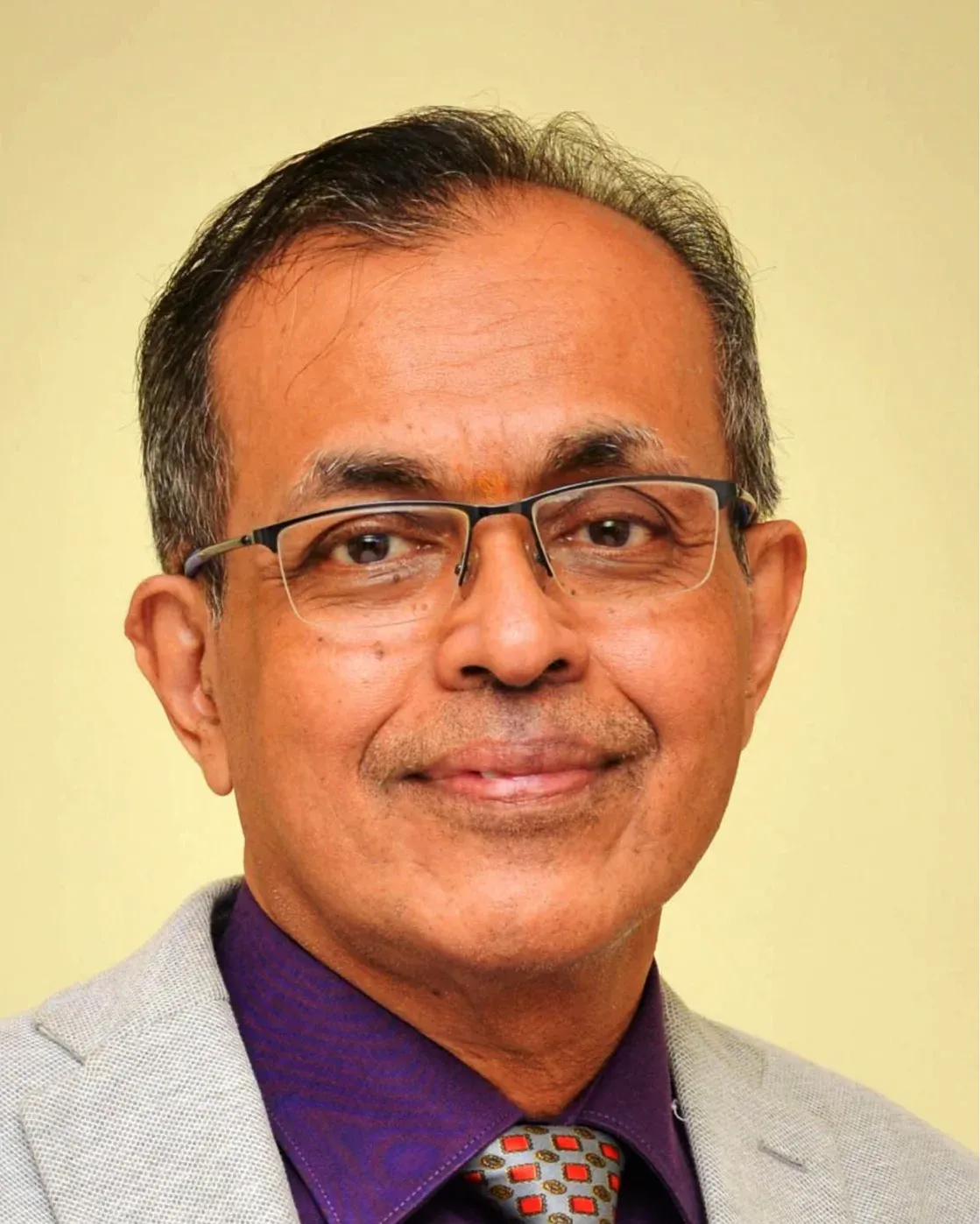
The Dentist Who Wrote Cinema’s Story
Rajiv Vijayakar on 35 years of film journalism, vanishing intimacy, and why every newcomer must first learn from the legends
By Krishna Mohan
In the early days of his dental practice, Rajiv Vijayakar had a problem most doctors faced: too few patients. Six hours of clinic time, and a handful of people walking in. So he did what he had done since the age of 15. He started writing—about films.
Today, Vijayakar is one of India’s most respected film journalists, the author of four books, and a National Award winner. He has sat on the National Film Awards jury twice and on the panel that picks India’s entry for the Oscars last year. But he began as a dentist.
A house full of film magazines
Films were a family habit. His parents were film buffs, and the Vijayakars went to the cinema almost once a week. His father worked at the Reserve Bank of India, and film magazines reached the house through his office library until the family started buying their own. His mother came from a family of doctors, his father from a family of bankers. Because his father was transferred often, the family lived in different parts of the country, and his mother wanted her son to have a profession that would not uproot him every two or three years. Medicine suited him, since he always leaned towards Biology.
But music was his real wish. He began composing tunes at thirteen. “In a middle-class, conservative Maharashtrian culture, where I was the only son, these things were not considered,” he says. He did not even dare to ask his parents if he could learn music formally.
Two films and a typewriter
It was a pair of films that turned a private habit into a career. Vijayakar watched Naseeb and Laawaris and felt strongly that they were reworkings of Amar Akbar Anthony and Muqaddar Ka Sikandar. He wrote his reasons all down on foolscap paper between patients, until it was long enough to be an article.
His father had it typed by a stenographer at his office. It came back full of mistakes, because the typist did not know Hindi film spellings. Vijayakar corrected it, got it retyped, and mailed it to Bikram Singh, the editor of Filmfare. At that time the magazine came out every fortnight. A couple of months later, he spotted his article in the “Highlights of the forthcoming issue” column, and waited for it with what he calls “bated breath”.
The article was published. He went to meet the editor, who asked what else he could write for them. Over the next nine years he sent seven or eight stories, of which three were published and the rest rejected by Singh as well as subsequent editors. So he started looking for other doors.
The advice that changed everything
At Cine Blitz, deputy editor Virginia Biswas looked at his rejected pieces and asked, “Have you ever thought of doing interviews?” He had not. Her reasoning was simple: “You are not known, but if the celebrity you interview is known, you’ll get more openings.”
That gossip magazine could not use his serious writing, but she pointed him elsewhere. A new magazine, Tinseltown, had just started. Maine Pyar Kiya had been released and its music was a hit, so he proposed an interview with the composer Raamlaxman. He found the number and called him on his landline.
The composer gave him an appointment for Sunday at 11:00 When Vijayakar arrived, Raamlaxman told him he had forgotten the appointment and had somewhere to go. Vijayakar suggested they talk for whatever time he had. “You won’t believe it,” he says. “I left his house two and a half hours later, with no mention of that so-called appointment.” It was his first interview, and it went off like the proverbial breeze.
Doors then opened across publications, including Mid-Day and G magazine. In 1993, he became the Mumbai correspondent of the US paper India West, a job he found through an advertisement in the Times of India. He ran their whole Entertainment section for nearly three decades, until the paper folded during Covid in December 2021. His work has also appeared in Filmfare, Stardust, Showtime, Rediff.com, Deccan Herald, Bollywoodhungama.com, Worldspace Radio.com, Shaaditimes.com, Indya.com, Indian Express and the Times of India, and he counts Screen as his longest Indian association. His articles were translated into Bengali, Marathi, Gujarati and Hindi, as he also wrote for Ananda Bazar Patrika, Chitralekha and Amar Ujala
Fifteen years of two full-time jobs
He did not quit dentistry for journalism. For the first fifteen years, he did both. “I was practising for six hours, and I was doing journalism full-time.” He slept about five hours a night. On top of that, he spent about two and a half years in radio, writing over 200 scripts for HMV’s Hindi FM programming, and about a year in television as a researcher. He says that Channel V in India started with him.
His dental practice ended because his clinic was a rented place in an old Mumbai pagdi building. The landlord began harassing him over rent and water, his daughter was about to enter medical college, and the stress had become too much. “I took a decision. Income is going to be less, but I have this backup. Let me now focus on that backup.”
How cinema has changed
With over three decades of films behind him, Vijayakar refuses to name one golden decade. The 1940s and ’50s had rich, varied subjects, he says. By the ’60s colour and big budgets pushed films towards grandeur and formula, the ’70s and ’80s were a mix, the ’90s returned to romance, and the new millennium changed everything.
But he thinks two things have weakened the connection between films and audiences. First, stars were once exclusive. “You never saw Amitabh Bachchan on Twitter. People saw stars only when their film released, or if they were lucky enough to catch a shoot. That curiosity meant that an average film could still become a hit.”
Second, the music has changed. “The music used to be the trailer of the film.” Songs were created for a situation, he says, not as generic dance numbers, and today often only a fragment of a song is used in the background. Music directors, he thinks, are sometimes forced to do what they do not enjoy.
He is generous about the present, though. Today’s lyricists and composers are more original and no longer copy the previous generation, as the composers of the ’90s often did. Actors are better trained and no longer locked into one image. “Today anybody does any genre of role.” As proof he points to double roles across the decades, such as Rajesh Khanna in Sachaa Jhutha and Shah Rukh Khan in Paheli. In these, he says, the actor had to create two distinct characters with the same looks, while the audience knows which is which and the heroine does not. “That is film acting. You are being effortless, natural, simple. That is the acme of performance.”
Don’t forget the people who built it
Vijayakar worries that young journalists, filmmakers and writers no longer know the people who laid the foundation of Indian cinema well. He tells a story about 1940s singer-superstar K. L. Saigal. His parents thought Saigal was outdated, but Vijayakar discovered his music through cassettes mailed to him by HMV, and wrote a research article for his centenary. A reader on Facebook phoned him and said, “Rajiv ji, I didn’t know you had met Saigal.” Vijayakar replied that Saigal died in 1947. “How old do you think I am?”
He wants film schools to teach the glories of Indian cinema besides their focus on world cinema. “Why did Raj Kapoor last as a filmmaker for 40 years? Why did B. R. Chopra make hits in the ’50s as well as the 2000s?” He has lectured on film music and cinema in Benaras, Pune and Mumbai, and finds it sad that many young people do not know who Shankar-Jaikishan or Kalyanji-Anandji were.
Why Dharmendra
Vijayakar’s book Dharmendra: Not Just a He-Man came from watching the actor since childhood, and then meeting him. He calls Dharmendra, Shammi Kapoor and Dev Anand the three most underrated actors, “phenomenally and consistently popular as stars” and still natural in every role. What struck him most was Dharmendra the man: his grounded warmth, his poems, the way he raised his children, Sunny, Bobby and Esha Deol.
Inside the Oscar jury
He says he never felt pressure, either on the National Awards jury (twice) or on the Oscar panel. The two are very different, he explains. The National Awards choose the best film and best work in each field. His Oscar jury of 14, chaired by N. Chandra, had to choose a single entry from 22 films in multiple languages. Their brief was not to pick the best film. “We have to select a film which has the best chance of winning in the US at the Academy,” said Chandra. That includes the sensibilities of the American voters and a producer able to fund an expensive campaign.
The lost intimacy of the interview
Interviews, he says, have changed. He himself has never asked controversial or gossipy questions unless the celebrity’s team arranged the interview for that very reason. Groups of three to forty journalists meet a star together, publicists record the sessions for safety, and journalists are told in advance what not to ask. “That intimacy has gone, where you could talk to a director, composer, or actor for one, one and a half, two hours.” Solo interviews are now rare, usually for the biggest publications, and often done by phone or Zoom.
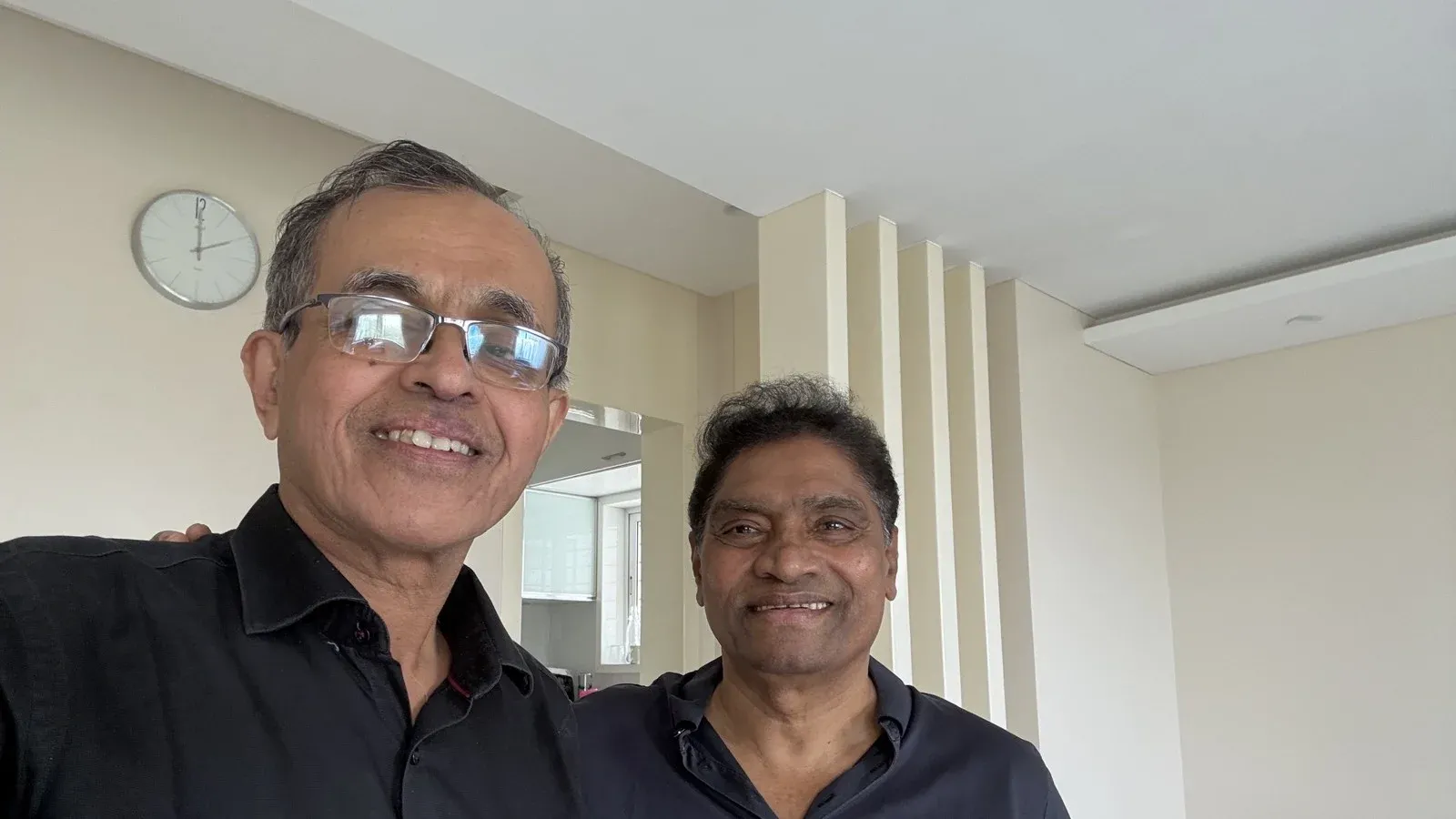
Rajiv Vijayakar with Johny Lever
His own songs
He has composed tunes for himself since he was thirteen, writing the opening line of each song in a notebook and checking it ten days later. If he still remembered it, he assumed someone else would like it too. He now has over a hundred. When independent singles became possible, he approached the Indian Performing Rights Society for membership, which required a published work. His old friend, the composer Raju Singh, helped him complete the lyrics, with some help from his wife, who is better at Hindi and Urdu than he is. When the singer he had in mind backed out, he recorded the first song, Zindagi Jeene Wale, in his own voice. His second song, Sai Baba tere charnon se, was released by Times Music. More are planned, and he adds, “If it happens, it happens.”
What he tells newcomers
His advice to young actors and musicians has two parts.
Know your own legends first. “Get acquainted with Dilip Kumar, Shah Rukh Khan and Ranveer Singh before you go into the Michael Caines and Tom Cruises, who are also important, but our people are more important.” He recalls South giants K. J. Yesudas and S. P. Balasubrahmanyam telling him they were great students of Mohammed Rafi.
Be an all-rounder. Be able to write any kind of story, direct any kind of film, compose any kind of song. He points to Laxmikant-Pyarelal, who could do from a comic song about a mosquito to a deeply serious one. And he praises the healthy rivalry among the great composers, who competed fiercely and yet remained personally close, like Laxmikant-Pyarelal, Kalyanji-Anandji, S.D. Burman and R.D. Burman.
Destiny, and what a National Award changes
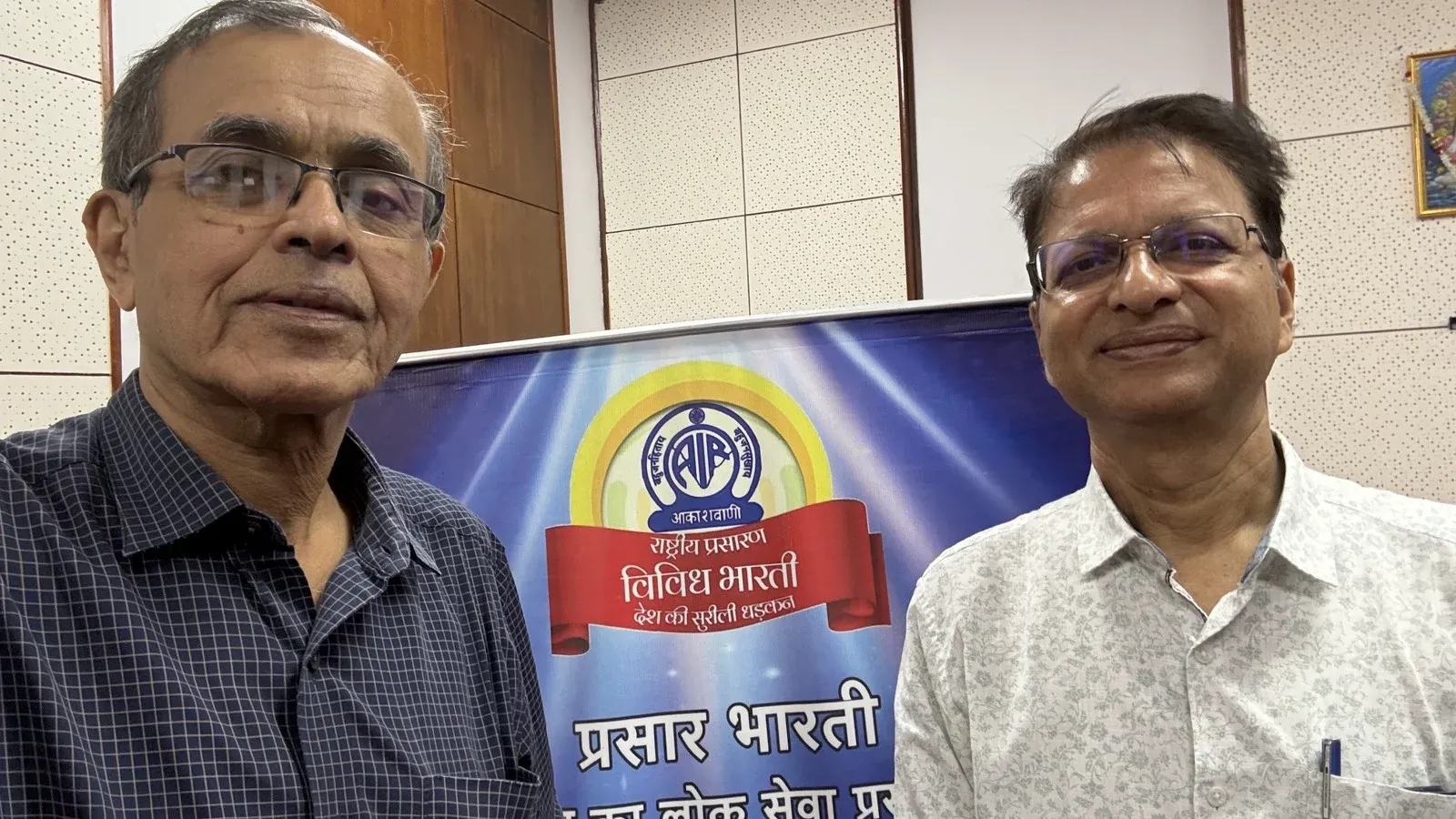
He is a strong believer in destiny. “I never knew I could be a journalist, a critic, an author of four books, one of which wins the National Award.” He never expected to be a jury member, to have songs he composed in the market, or to host programmes for Vividh Bharati, but once they happened, “I had to give it my all.”
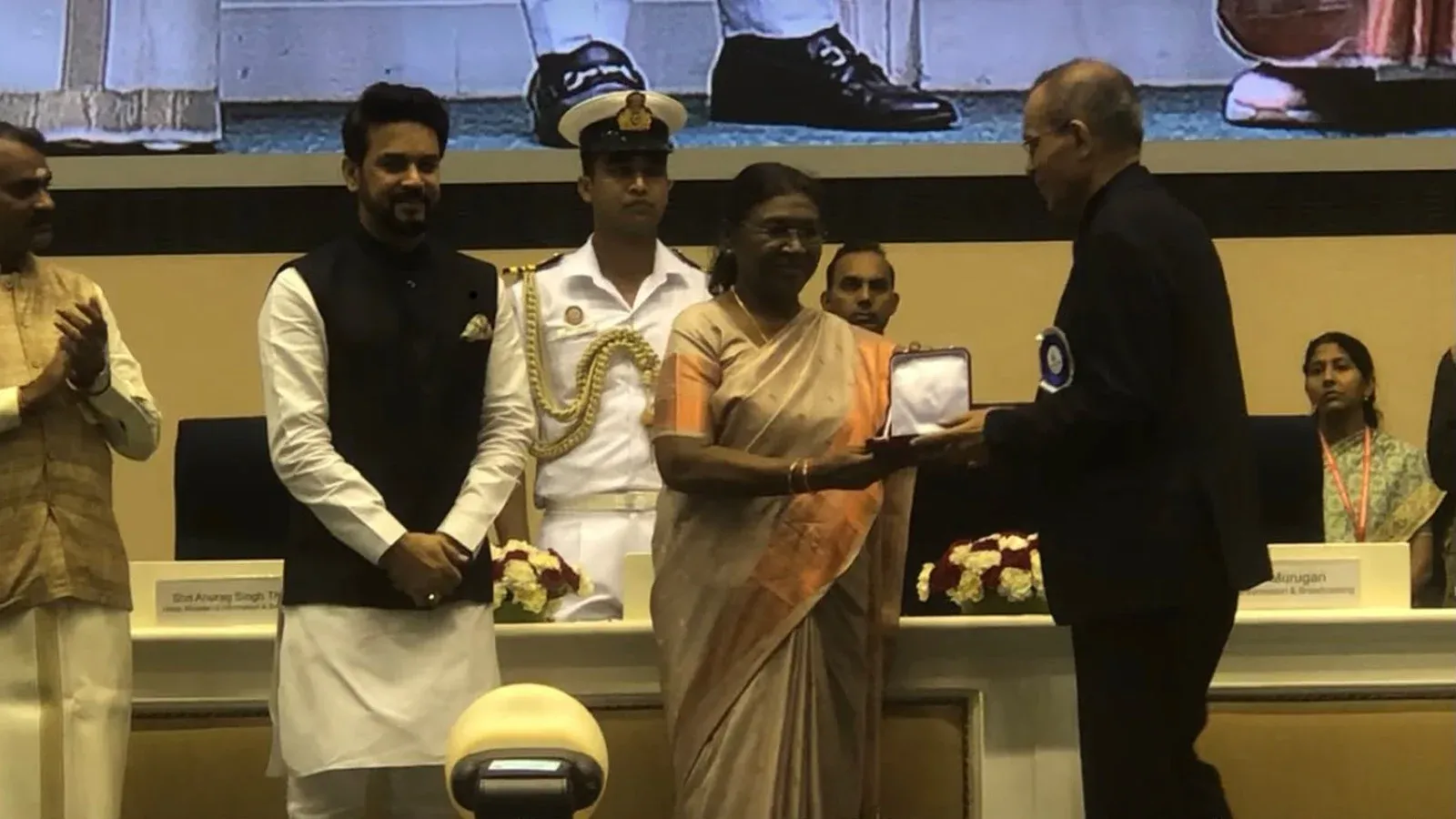
He won the National Award for his book on Laxmikant-Pyarelal, whom he had venerated since childhood. So did the award change his life? “No,” he says. It brings greater responsibility, not more assignments. He is working on two more books now. “If my best is liked by the jury and is better than the best of the others, I might win the National Award again.”