
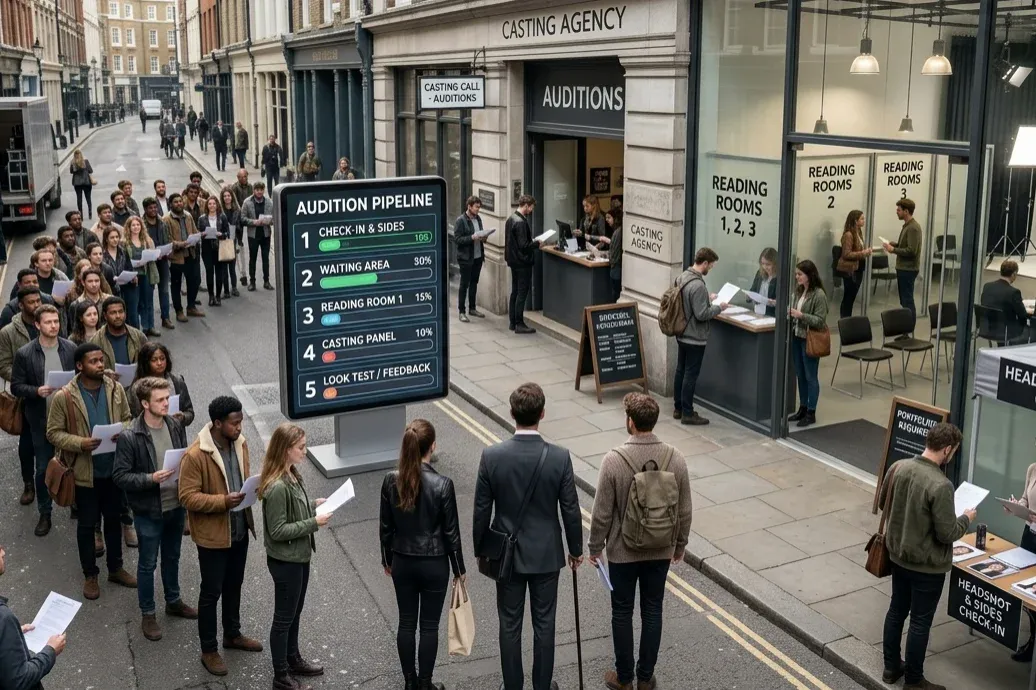
How Television Casting Works: Inside the Pipeline of Daily Soaps and Series
Television casting is a fast-paced, multi-stage process designed to match actors with specific character briefs under tight production deadlines. Whether it is for Indian daily soaps or international scripted series, the workflow generally follows a structured pipeline.
1. Breakdown and Character Brief
Once a show is greenlit or a new track is written, the creative team and showrunner create a character breakdown. This document outlines the character's age, physical appearance, vocal tone, personality traits, and backstory. The production house then hands this brief over to an in-house casting team or an independent casting agency.
2. Sourcing Talent
Casting directors tap into multiple channels to find suitable profiles quickly:
- Talent Databases & Agencies: Reaching out to established talent managers and browsing internal databases of registered actors.
- Casting Calls: Floating brief descriptions (without revealing the show's title or major plot points) across actor WhatsApp groups, Instagram pages, and casting portals.
- Street/Fresh Casting: For specific regional dialects or fresh faces, casting assistants often scout theatre groups, drama schools, or local social media creators.
3. The First Audition (Self-Tape or Studio)
Actors receive a short script—known as sides—usually a few hours to a day before the audition.
- Introduction (Slate): Before performing, the actor records a brief "intro" stating their name, age, height, current city, and front/side profile angles so the team can assess their natural look and camera presence.
- Performance: In modern television casting, the first round is overwhelmingly done via self-tapes shot on a phone against a neutral background. For studio auditions, a casting assistant reads the off-camera cues while recording the actor's performance.

5. Chemistry Reads and Screen Tests
For lead roles, romantic pairs, or core family members, solo auditions aren't enough. Casting directors organize chemistry reads (or pairing tests), bringing shortlisted actors together to perform scenes opposite one another to evaluate their natural rapport, height difference, and screen energy.
6. Network Approval and Locking
Television is heavily driven by broadcast networks and OTT platforms. The production house submits the top two or three final screen tests for each role to the channel's programming and creative executives.Once the network signs off on the final choice, the production house negotiates fees, dates, and exclusivity clauses before issuing the final contract.
Images Credit- AI Generated